

Dr.S.L.N.T.Srinivas
Expert in Cooperative Governance & Management
Member, All India Authors Group
Ministry of Cooperation, Govt. of India
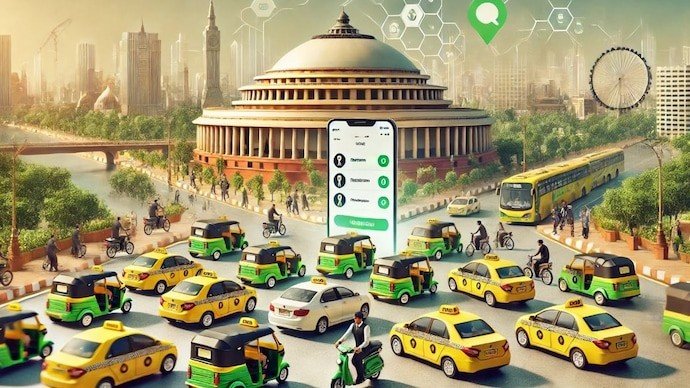
India’s transportation ecosystem is undergoing a rapid transformation with the rise of app-based mobility services and digital integration of fleets. Within this evolving landscape, the Bharat Cooperative Taxi initiative is being seen as a fresh experiment to democratize the taxi business through member-owned and professionally managed cooperative structures. Unlike commercial operators driven primarily by profit maximization, cooperative taxis are rooted in the ethos of collective benefit, fair earnings, and inclusive service delivery.
At its core, the initiative seeks to empower drivers as owners rather than wage earners, ensuring that the revenue cycle directly benefits members while offering commuters quality, affordable, and reliable transport. This model resonates deeply with the principles of Atmanirbhar Bharat and the Government of India’s renewed emphasis on strengthening cooperatives under the Ministry of Cooperation (MoC), GoI.
Prospects and Opportunities
- Empowerment of Drivers:
By converting drivers into stakeholders, the cooperative taxi model can reduce exploitation by middlemen and aggregators. Drivers gain a voice in decision-making, and earnings are equitably distributed, enhancing their social and economic security. - Affordable & Transparent Services:
Since profits are not siphoned off by private aggregators, cooperative taxis can operate on a cost-plus model, providing passengers with competitive rates, transparency, and better service ethics. - Technology Integration:
A cooperative app, backed by government or cooperative federations, can match the efficiency of Ola, Uber, or other operators, while ensuring that user data and digital revenues remain within the cooperative ecosystem. - Support from MoC and State Governments:
With cooperative reforms being a priority for the Government of India, Bharat Cooperative Taxi could secure policy support, concessional financing, tax incentives, and fuel subsidies, making the model sustainable and scalable. - Rural and Semi-Urban Reach:
Commercial operators often focus on high-density urban markets. Cooperative taxis can expand to semi-urban and rural regions, bridging transport gaps and supporting last-mile connectivity.
Challenges and Concerns
- Technology & Branding:
Competing with established players like Uber and Ola requires cutting-edge digital platforms, strong branding, and customer trust. Developing and sustaining such a platform is a challenge. - Capital and Fleet Modernization:
To remain attractive, the cooperative needs continuous investment in new vehicles, EV adoption, and safety features. Mobilizing funds collectively may be slower than venture-funded commercial rivals. - Management and Governance:
Professional management is critical. Weak governance, political interference, or lack of trained managers may dilute efficiency and tarnish the brand. - Consumer Expectations:
Today’s commuters expect instant service, app reliability, and grievance redressal. Cooperative models must match or exceed these standards to compete effectively. - Regulatory Barriers:
Multiple state-level transport rules, taxation norms, and licensing processes can create friction unless the MoC coordinates closely with the Ministry of Transport and state governments.
Can It Be a Gamechanger?
The Bharat Cooperative Taxi initiative indeed has the potential to be a gamechanger for the cooperative sector—if it addresses governance, technology, and financing challenges with clarity. By putting drivers and service providers at the center, it offers a sustainable and socially just alternative to profit-driven aggregators.
Moreover, the initiative aligns with the vision of the Ministry of Cooperation to professionalize, modernize, and scale up cooperatives across sectors. If backed by strong digital infrastructure, transparent governance, and consistent policy support, cooperative taxis can carve out a significant share in India’s mobility sector while showcasing the power of cooperative enterprise in a modern digital economy.






2 Responses
Enjoy smooth transportation from Nassau Airport to Atlantis with reliable service and luxury vehicles. Our Atlantis to Airport rides are designed for comfort and punctuality. Book in advance for door-to-door service and peace of mind every step of the way.
Taxi driver Ahmadabad Jitendra ashok Kumar Vyas