
Dr (Prof) Prashant V Kadam
Editor in Chief (Education) GoaTV24
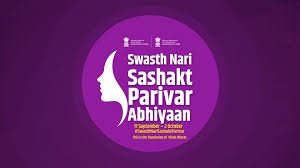
The Cooperative Deptt in Goa has directed all cooperatives societies, SHGs, federations and affiliated institutions across Goa to play an effective role in implementing the Swasth Nari, Sashakt Parivar Abhiyan, a national health mission aimed at improving the well-being of women and adolescent girls. In this analytical piece, the author argues that the successful realization of this scheme hinges on sophisticated realization of the existing mandate of Goa’s cooperatives.
The rationale behind integrating Cooperative Societies and Self-Help Groups (SHGs) into the Swasth Nari, Sashakt Parivar Abhiyaan is robust, driven by the principle of Jan Bhagidaari to secure women’s health as a shared community responsibility. This strategy correctly leverages the unparalleled grassroots reach and trust of these networks, which is particularly potent in a state like Goa that boasts a mature cooperative sector with over 5,400 cooperative societies and approximately 1,400 Women Self Help Group Cooperative Institutions as of early 2023. These organizations, which include 127 Urban Credit Societies serving over 7.64 lakh members and numerous Housing Cooperatives, represent a powerful, pre-existing infrastructure that can immediately enhance field-level convergence with ASHA/ANM workers across diverse Goan communities.
However, the execution is hampered by critical flaws that risk turning the mandate into an administrative failure rather than a genuine “mass movement.” The core economic functions of these societies—many of which are in credit, banking, and marketing—face Mandate overload and Mission Creep by having an extensive public health role imposed on them, diverting resources from their primary activities. This is exacerbated by a pervasive lack of core competency, as the staff lack the specialized training required for accurate health outreach, potentially diluting the quality of information. Crucially, the directive acts as an unfunded mandate by imposing these activities without allocating dedicated resources. Furthermore, the administrative burden of submitting detailed reports to two separate departments (Cooperation and Health) within a short timeframe can create a redundancy, increasing the risk of superficial compliance where Goa’s extensive cooperative base focuses solely on paperwork compliance instead of verifiable health outcomes.
Recommendations
- Shift Focus from Implementation to Facilitation:
In a strategy to optimize the execution of the “Swasth Nari, Sashakt Parivar Abhiyaan,” Co-ops and Self-Help Groups (SHGs) should limit their involvement to logistics/mobilization, which includes tasks such as announcing check-up dates, arranging transport, and convincing family members to participate, as well as providing the necessary venue provision for events; conversely, the crucial function of Health content delivery—which requires specialized expertise—must remain the exclusive domain of trained ASHA/ANM workers.
- Resource Constraints: Establish a “Health Outreach Fund” and Stipend:
To alleviate resource constraints and ensure successful mobilization, the establishment of a “Health Outreach Fund” is recommended, where a small, dedicated fund is created per Panchayat/Block specifically to cover essential logistics like tea, publicity materials, and transport; concurrently, a small, performance-linked stipend or incentive should be provided to the particular SHG or Co-op member who is directly responsible for meeting the established mobilization targets, thereby recognizing and rewarding their effort.
- Accountability Burden: Integrate Reporting Mechanism:
To streamline the accountability burden, all detailed operational reporting must be centralized through the Primary Health Centre (PHC); consequently, the Department of Cooperation should receive only a concise, quarterly progress summary from the Health Department, which must be based on verifiable metrics like mobilization and attendance rates rather than demanding separate, extensive reports from each cooperative body.
- Sustainability & Training: Nominate and Train “Health Coordinators”:
To ensure sustainability & training, it is essential to mandate that each participating organization nominate one permanent member to serve as the “Health Coordinator,” and subsequently provide this single point of contact with a short, certified training course administered by the Health Department, which will cover the specific details of the Swasth Nari, Sashakt Parivar Abhiyaan as well as the effective use of relevant health-related digital tools.
- Motivation: Public Recognition and Non-Monetary Incentives:
To effectively boost motivation, a system of public recognition should be instituted to acknowledge top-performing cooperatives and Self-Help Groups (SHGs) that achieve the highest mobilization rates; this recognition should take the form of being highlighted in official Panchayat meetings, departmental newsletters, or award ceremonies, thereby strategically linking their vital social contribution directly to their economic success.
The successful realization of the “Swasth Nari, Sashakt Parivar Abhiyaan” hinges on a sophisticated strategy that acknowledges the existing mandates of Goa’s cooperatives. Registrar of Cooperative Societies Ashutosh Apte’s statement mandating the involvement of cooperatives underscores the government’s aim to utilize the extensive cooperative networks for turning the campaign into a “mass movement.” However, the solution lies not in making them health implementers, but in redefining their role as powerful logistical facilitators focused on mobilization, venue provision, and grassroots outreach. This change protects their primary mandate of economic empowerment, preventing mission creep. By supporting them with a Health Outreach Fund and targeted resources, the unfunded mandate can be resolved. Furthermore, streamlined reporting, centralized through the PHCs, reduces the administrative burden. This measured approach allows Goa to strategically capitalize on the robust position of its cooperative sector as a trusted social force, ensuring the Abhiyaan achieves meaningful, sustainable health outcomes without compromising the organizations’ core economic objectives.