
Leapfrogging of Startup Ecosystem for Cooperative Enterprises: A Paradigm Shift in the Government of India Policy
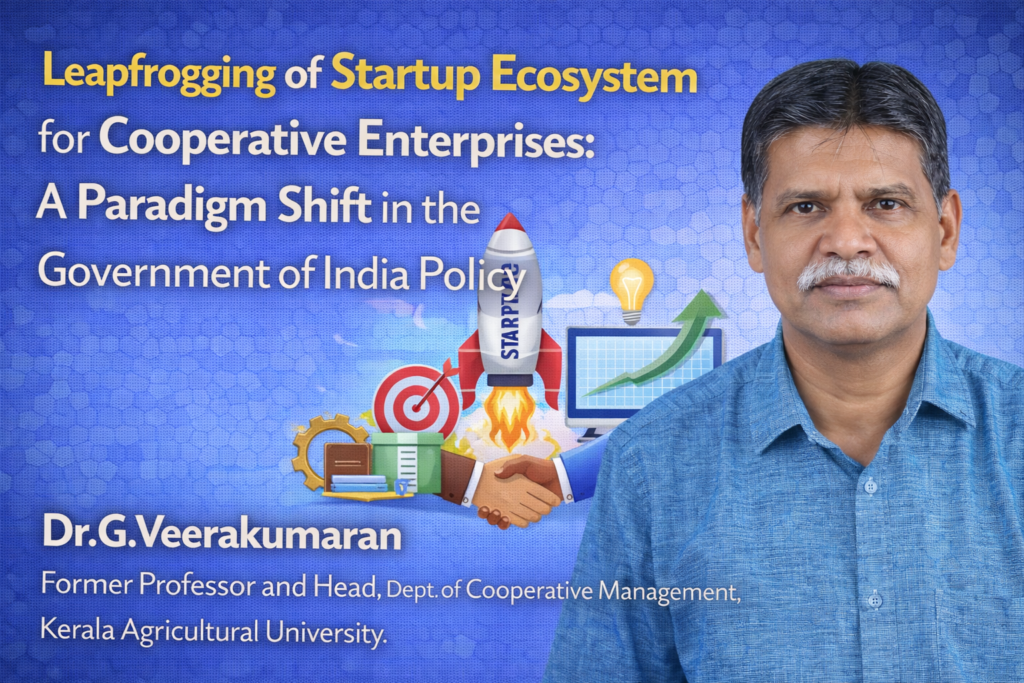
Human civilisations has emerged due to surplus food production, and as a result, trade started flourishing in the world.
Bharat Taxi: Can India’s Cooperative Model Disrupt Platform Capitalism in Urban Mobility?
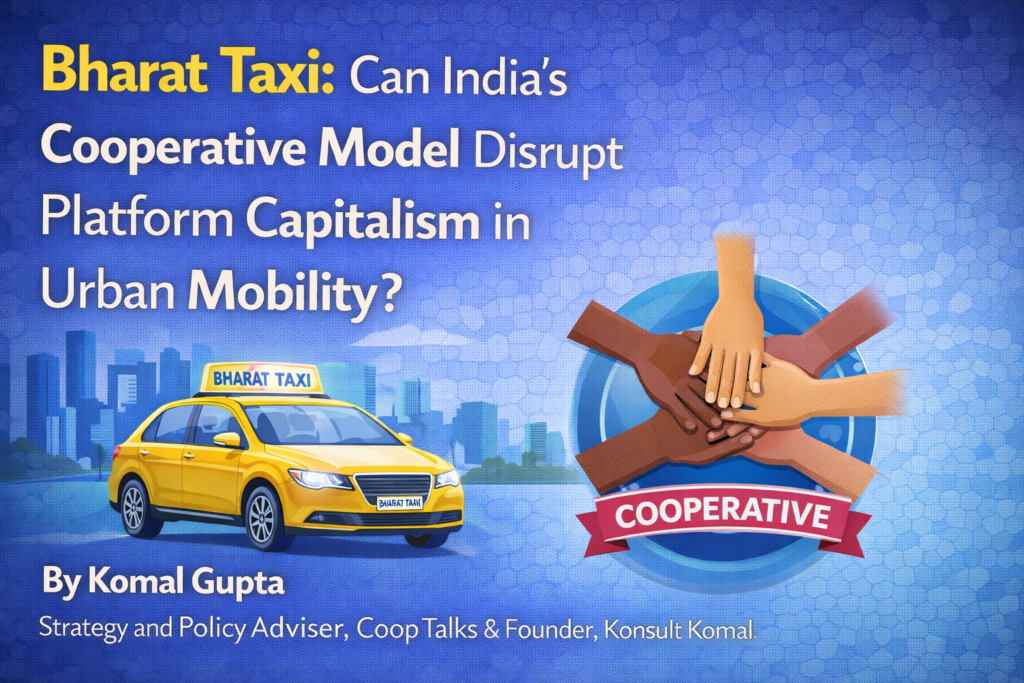
India’s app-based ride-hailing market has reshaped urban commuting over the last decade. Platforms such as Uber and Ola have embedded algorithm-driven pricing, real-time vehicle matching and digital payments into everyday life. Ride-hailing is no longer a niche convenience.
The Resurgence of the Milk-Sacred: Inclusive Growth through Dairy Cooperatives and Ancient Wisdom

The dawn of Viksit Bharat 2047 (Developed India 2047) is fundamentally tied to the rural economy, where the white revolution is transitioning into its second phase. Since the establishment of the dedicated Ministry of Cooperation in 2021, the cooperative sector has witnessed a tectonic shift in policy support. Yet, as the nation targets inclusive growth, it faces a paradox: while the “Amul Model” stands as a global beacon of success, many state-level dairy cooperatives remain stagnant or failing. To bridge this gap, India must pivot toward a reformative paradigm—one that marries modern cooperative incentives with the profound principles of Ancient Indian Knowledge Systems (IKS) for governance.
Unati Drone Academy is Empowering Youth Through Technology : Jyoti Saroop

The Unati Drone Academy is a pioneering initiative under the vision of The Unati Agri Allied and Marketing Multistate Co-operative Society Limited (UAMMCL) which aims to build a technology-enabled, cooperative-driven sustainable rural economy. The Unati Drone Academy, which proudly stands as India’s first DGCA-affiliated Remote Pilot Training Organization (RPTO), aims to, empower youth to become skilled, certified, and future-ready professionals in India’s rapidly growing drone-ecosystem. The details of this Academy can be known from www.unatidroneacademy.com
Cooperatives in the Budget – Focus on Capacity Building and Strengthening the Ecosystem
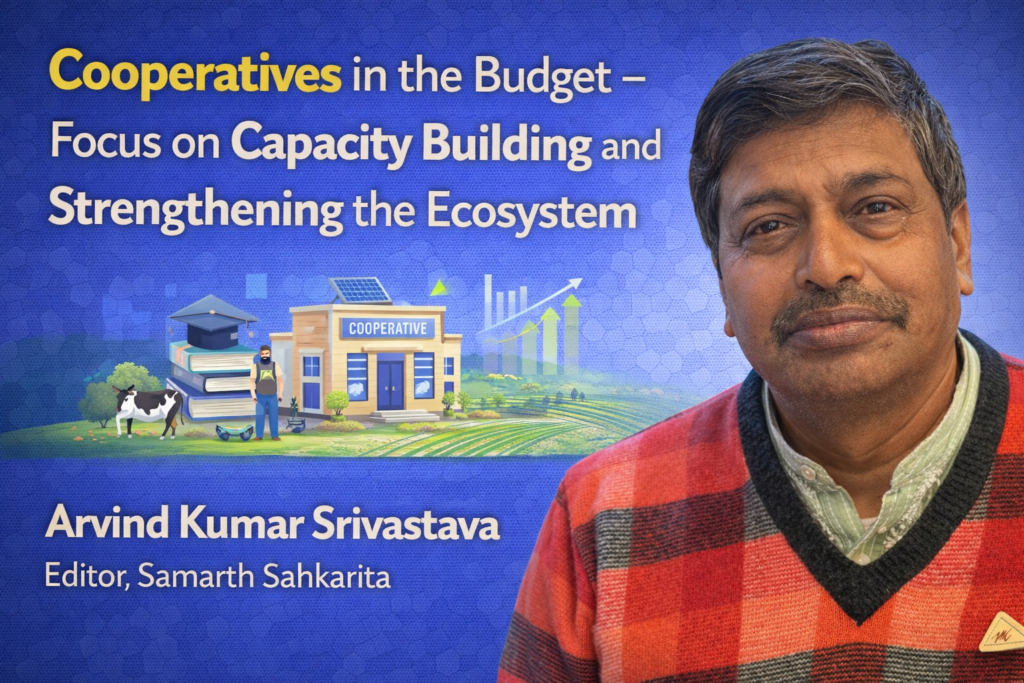
The Union Budget for 2026–27 has been presented against the backdrop of heightened global uncertainties affecting trade and multilateralism, while also opening avenues through bilateral engagements. In this context, the Budget focuses on building resilience to volatile global dynamics. It aims to strengthen the ecosystem to accelerate and sustain economic growth, enabling the country to withstand challenges and seize emerging opportunities.
Union Budget 2026: Cooperative Sector in India is More Visible Than Before

Prior to the presentation of the Union Budget, the Finance Minister tabled the Economic Survey 2025–26 in Parliament on 29 January 2026. Despite global geopolitical tensions, trade disruptions, and inflationary pressures, India’s First Advance Estimates project real GDP growth at 7.4% and GVA growth at 7.3% for FY 2026.
UNION BUDGET 2026-27: Absence of Explicit Budget proposals for Rural Cooperative Banks Is Not Very Inspiring
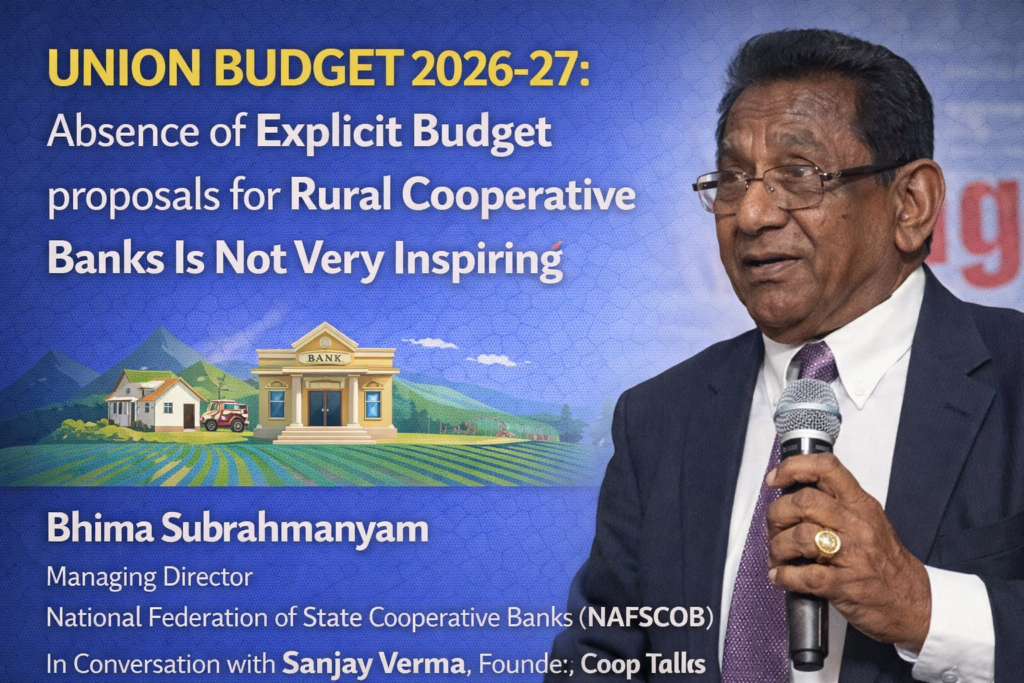
The Union Budget 2026-27, based on and inspired by 3 kartavyas, was presented on 1st February 2026 by Hon’ble Finance Minister of India Nirmala Sitharaman. In order to address these three kartavyas, a threefold approach as supportive ecosystem has been adopted.
Budget 2026-27 Empowers Cooperatives to Professionalize, Expand Markets, and Increase Farmers’ Income; Dr. K. K. Tripathy
The Budget envisages promoting entrepreneurship, value addition, and collective resource management. It also empowers cooperatives to professionalize operations, expand markets, and increase farmer incomes. A framework has been suggested for resilient, integrated cooperative networks rather than fragmented entities.
Union Budget 2026-27; A Decisive Shift From Symbolic Support to Structural Empowerment of Cooperatives

Yes—Union Budget 2026–27 marks a decisive shift from symbolic support to structural empowerment of cooperatives.
For the first time, the Union Budget is not just allocating funds to cooperatives; it is redesigning incentives, taxation, and institutions in a way that aligns with the National Cooperation Policy 2025, which calls cooperatives the second engine of India’s growth.
The most important signal is this:
The Budget rewards cooperatives when value flows to members.
Union Budget 2026: India Has Declared Cooperatives as the Second Engine — Now Fuel Them Like One
For the first time in independent India, something fundamentally important has changed. Cooperatives are no longer invisible.
The creation of the Ministry of Cooperation, the rollout of the National Cooperation Policy 2025, the revival of PACS, their computerisation, the formation of NCEL, NCOL, BBSSL, Bhart Taxi and focused schemes like Ayushman Sahakar, Sehkar Sarthi have sent a strong and unambiguous signal