
Komal Gupta
Director-Strategy and Policy, Coop Talks & Founder, Konsult Komal
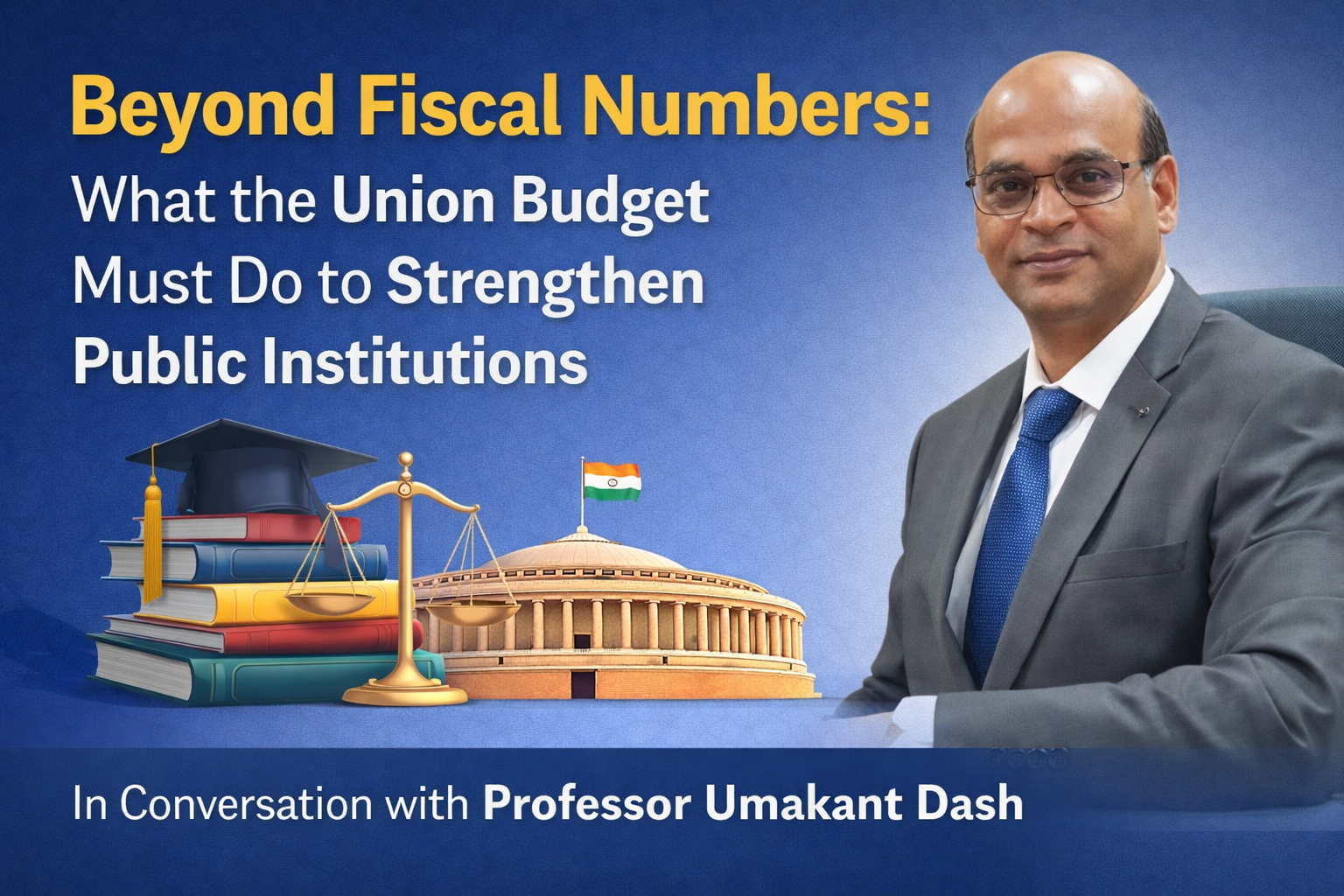
In conversation with Professor Umakant Dash, Vice Chancellor, Gokhale Institute of Politics and Economics
1. From a policy research perspective, what should the Union Budget prioritise to strengthen the role of evidence-based research in public policymaking?
As we approach the Union Budget 2026–27, the critical question before us is not simply the size of allocations, but whether the fiscal intent is being translated into institutional capacity, policy coherence, and measurable societal impact aligned with the long-term vision of Viksit Bharat @2047.
The Union Budget should move beyond funding research as an academic exercise and instead institutionalise the compulsory use of evidence in policymaking. There should be budgetary provisions for policy-linked research, with clear mandates for ministries to commission independent evaluations, longitudinal impact studies, and pilot-based learning before programmes are scaled nationally.
2. How can the Union Budget better support long-term institutional capacity building in sectors like cooperatives and rural development?
Capacity building must shift from scheme-centric spending to institution-centric investment. The Budget should support multi-year funding for leadership development, professionalisation of management, digital systems, and governance reforms in cooperatives and rural institutions.
Dedicated support for national and regional centres of excellence, faculty positions, and practitioner training would create durable institutional capability aligned with rural transformation and the revival of cooperatives.
3. What role can universities and policy research institutions play, with budgetary support, in shaping future-ready public institutions?
Universities and policy research institutions can act as knowledge partners to the State and central government, supporting policy design, implementation research, and continuous learning. With predictable budgetary support, institutions can host policy labs, regulatory sandboxes, and executive training for civil servants and local institutions. This would help bridge the gap between theory and practice, strengthen state capacity, and embed a culture of evidence, experimentation, and adaptive governance in public institutions.
4. In your view, what is one structural reform the Budget should focus on to improve governance and institutional effectiveness?
A critical reform would be the transition from input-based budgeting to outcome- and institution-based budgeting. Allocations should be linked not only to expenditure targets but also to institutional performance, governance quality, and service delivery outcomes.
5. How can annual budget exercises align better with long-term national development goals rather than short-term interventions?
Annual budgets should be treated as instruments of strategic transition to sustain momentum for long-term development while remaining responsive to emerging challenges. Annual budgets, therefore, must be nested within clearly articulated medium-term fiscal and sectoral frameworks, aligned with national goals such as Viksit Bharat @2047.