
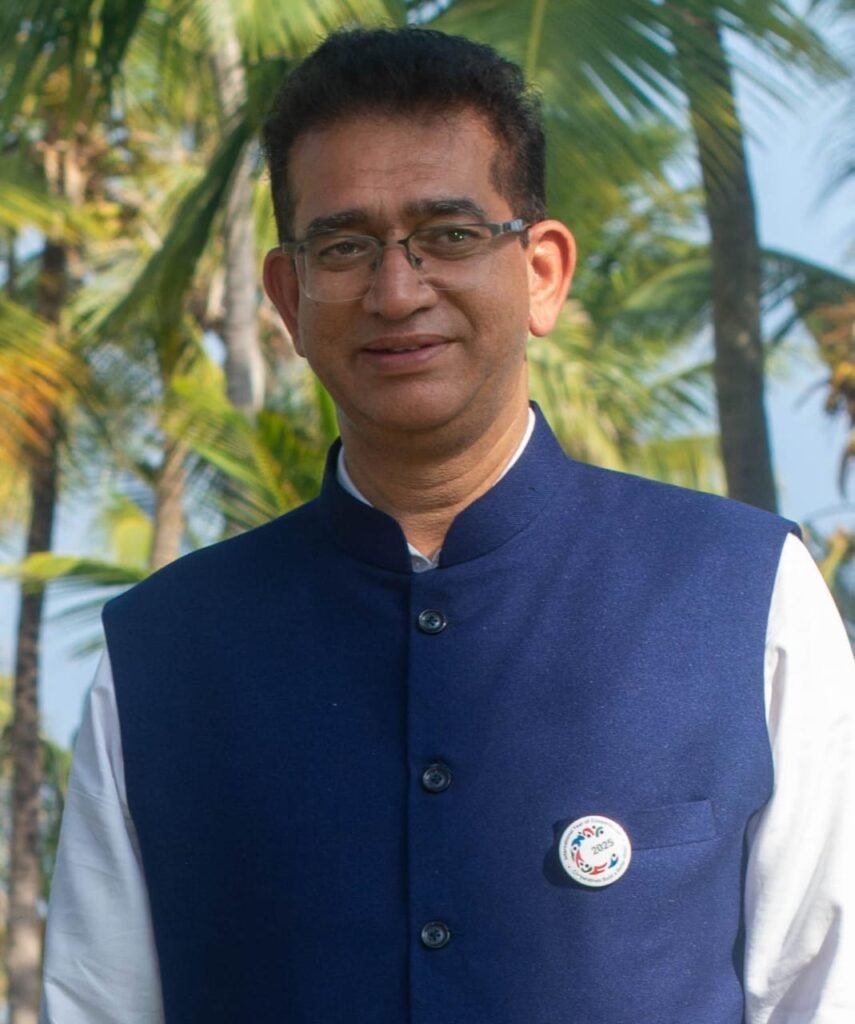
Jyoti Saroop
Founder & Director, Unati Cooperative.
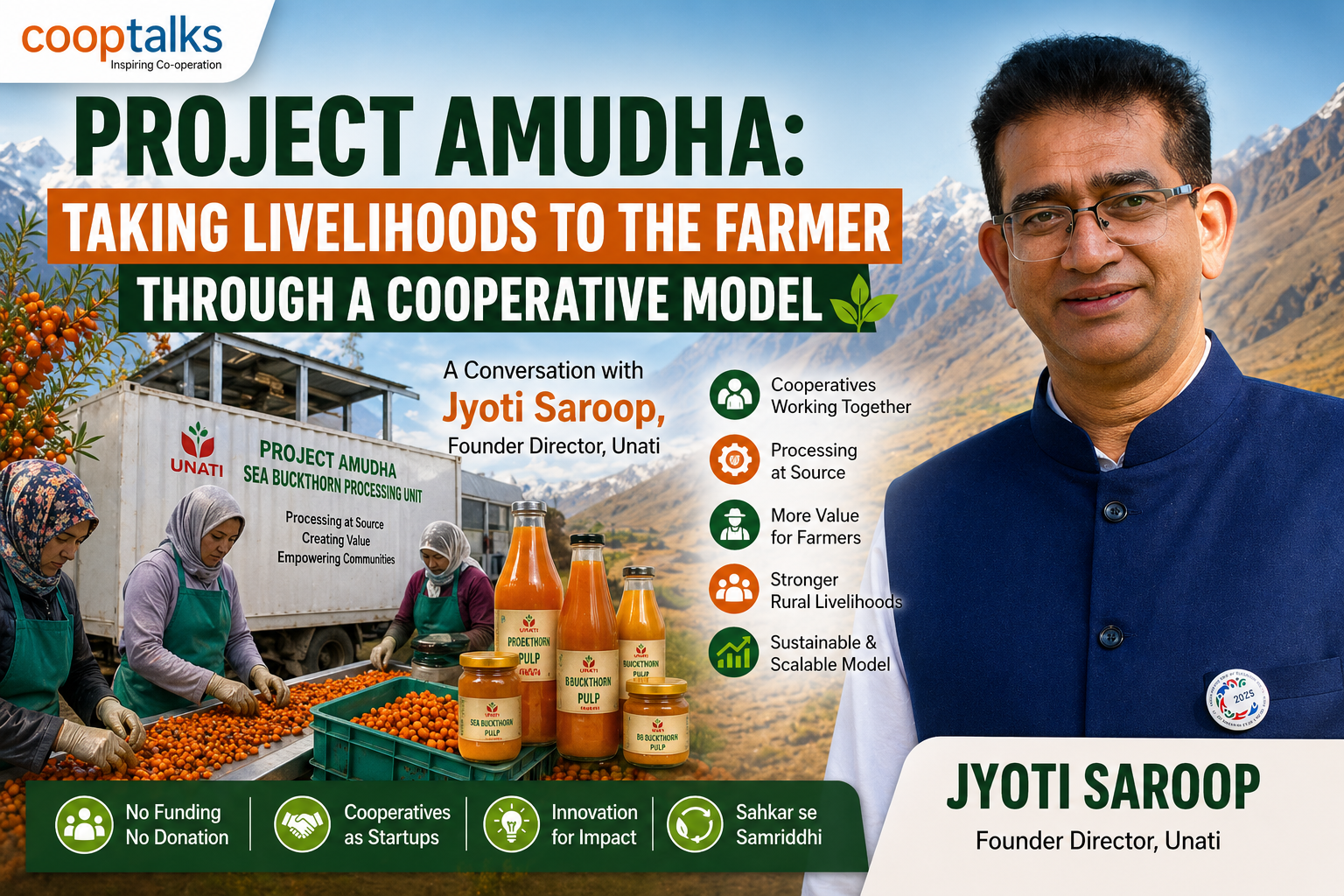
In recent years, we have seen many development models being implemented in rural and remote regions, but not all of them have been able to create a lasting impact—especially in fragile geographies like Ladakh. In this context, Unati Cooperative has been experimenting with a different approach through its Project Amudha. Jyoti Saroop, Founder Director of Unati, has a candid conversation with Sanjay Verma, Founder/Editor of Coop Talks, on several key issues.
Q1. Tell us briefly about Project Amudha. What led you to think that a different model was needed, especially in regions like Ladakh?
Project Amudha is very close to my heart. The word Amudha means nectar in Tamil. When we were discussing this project for Ladakh seabuckthorn and Baramulla apples, one of our members was blessed with a girl child, whom he named Amudha. We felt that the name carried purity, blessing, and new life. So, we named the project Amudha.
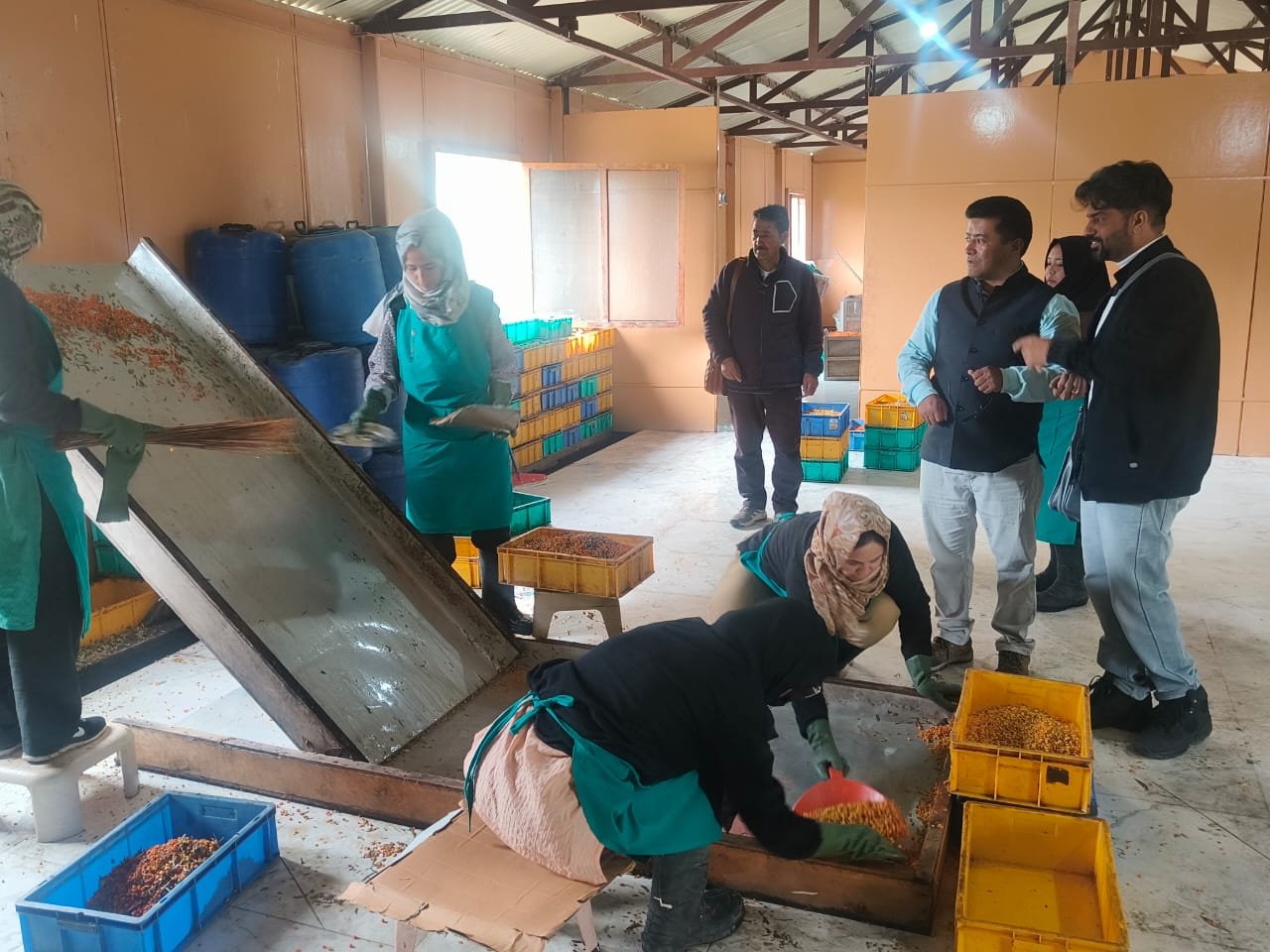
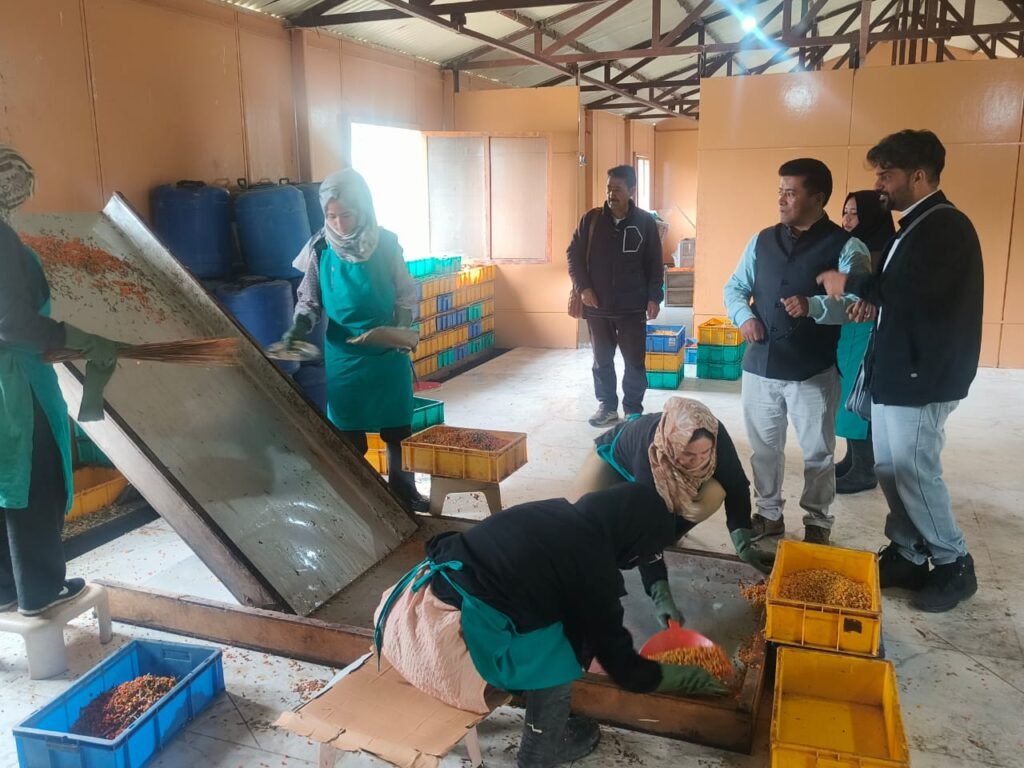
At its core, Project Amudha is a simple but powerful idea: processing should go near the farmer, rather than the farmer’s produce always traveling far away to factories.
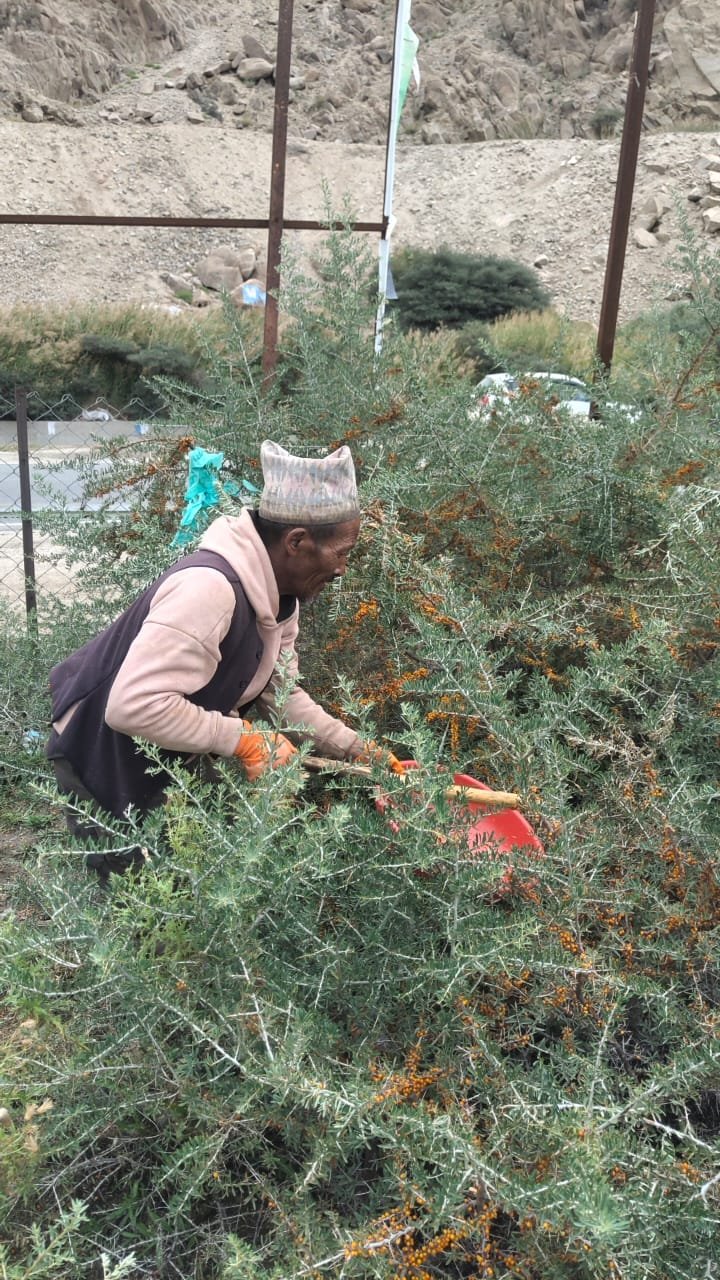
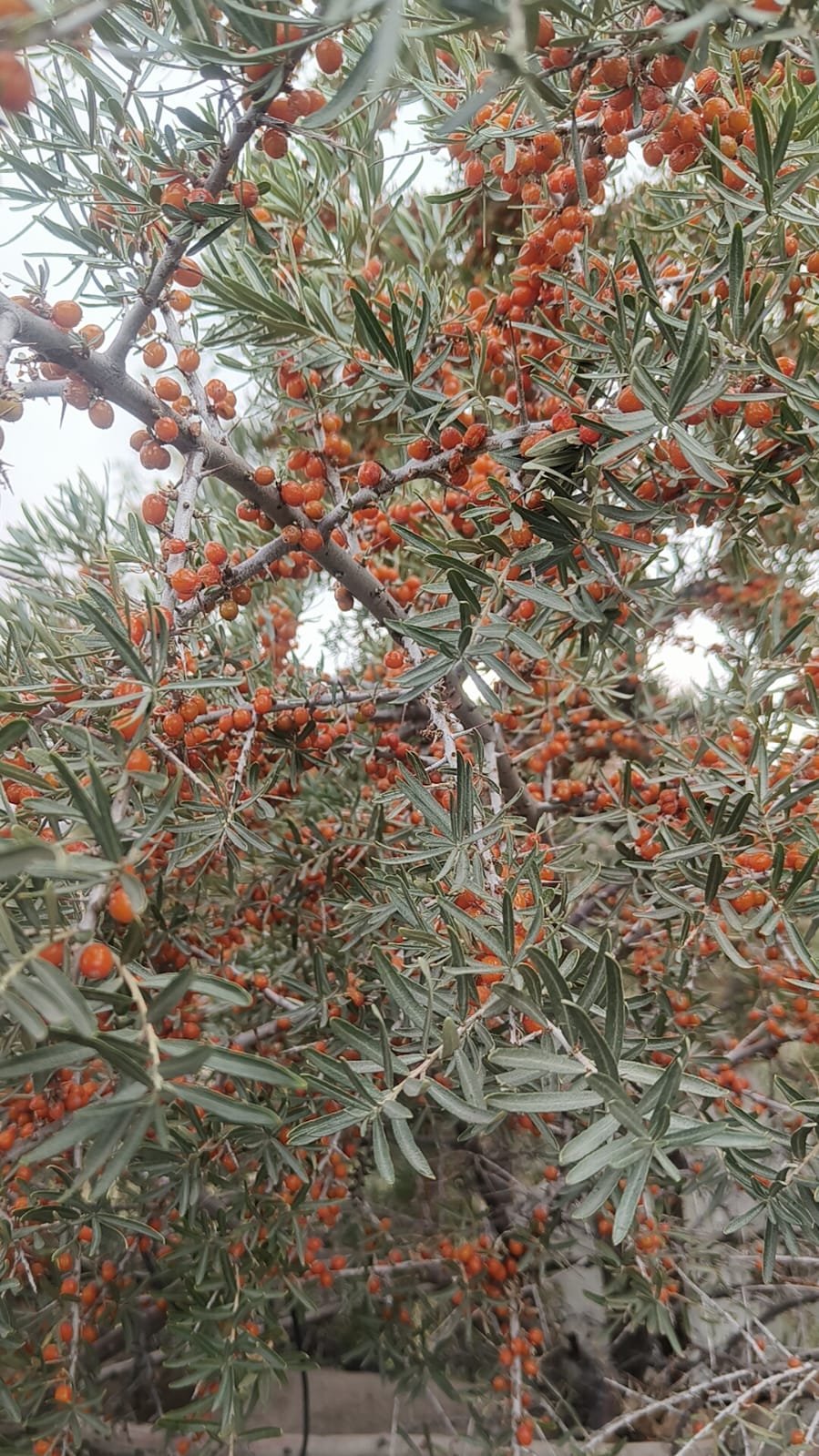
In regions like Ladakh, this becomes extremely important. Ladakh has rich natural resources like seabuckthorn, but it is also a fragile, climate-sensitive, and difficult geography. Traditional development models often do not work there because they are designed for more accessible regions. Roads, climate, altitude, logistics, and local exposure are all very different.
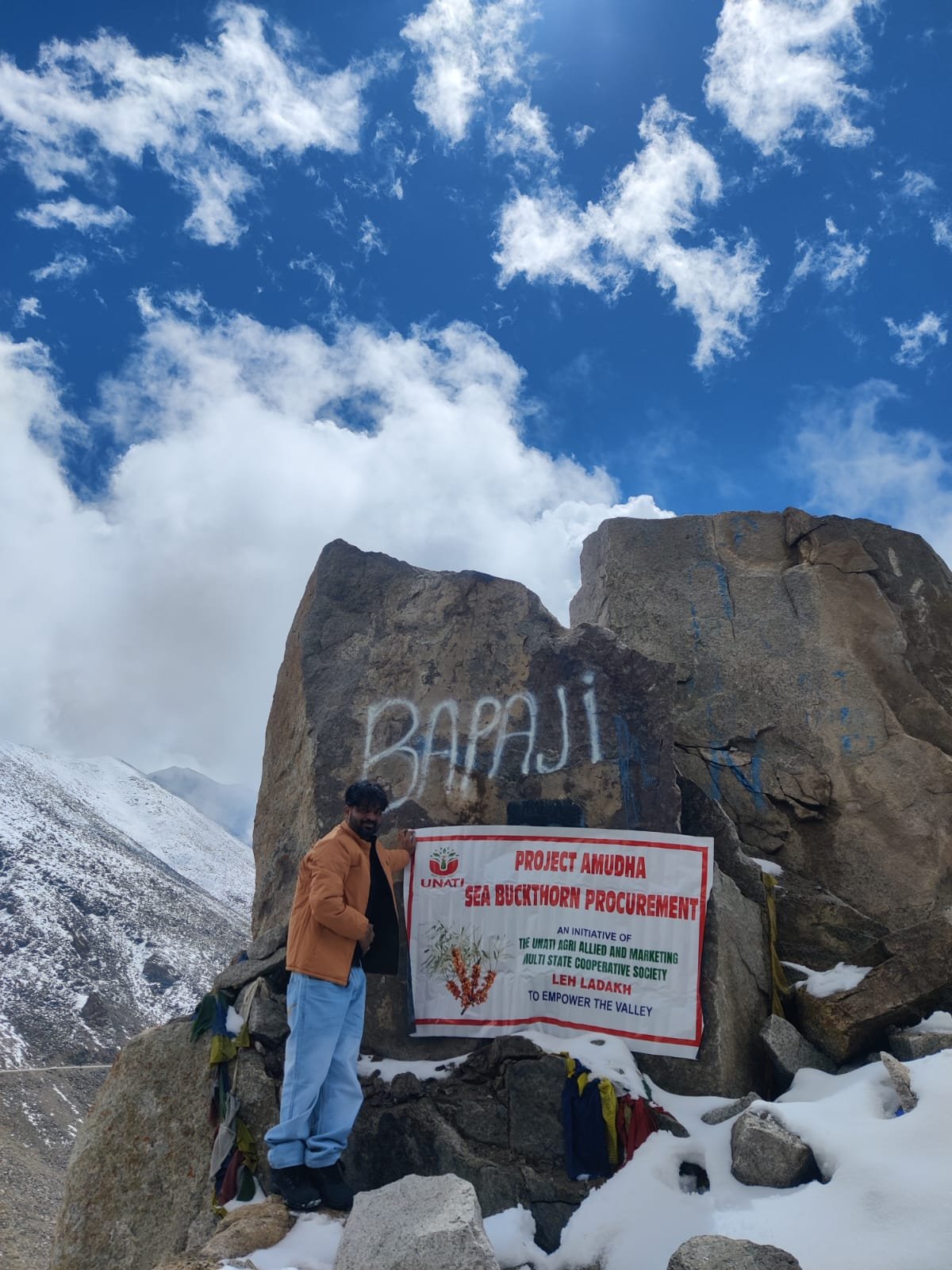
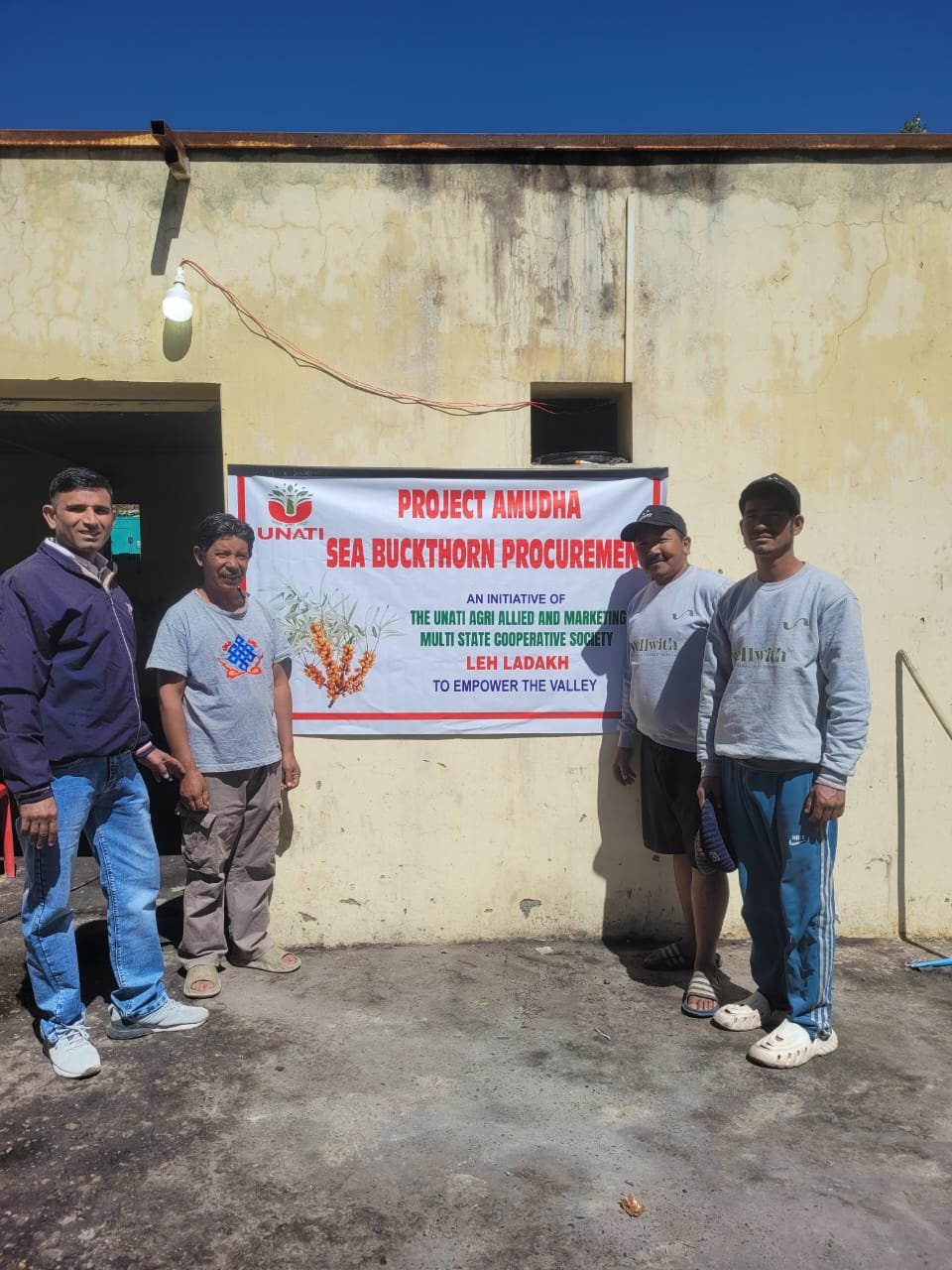
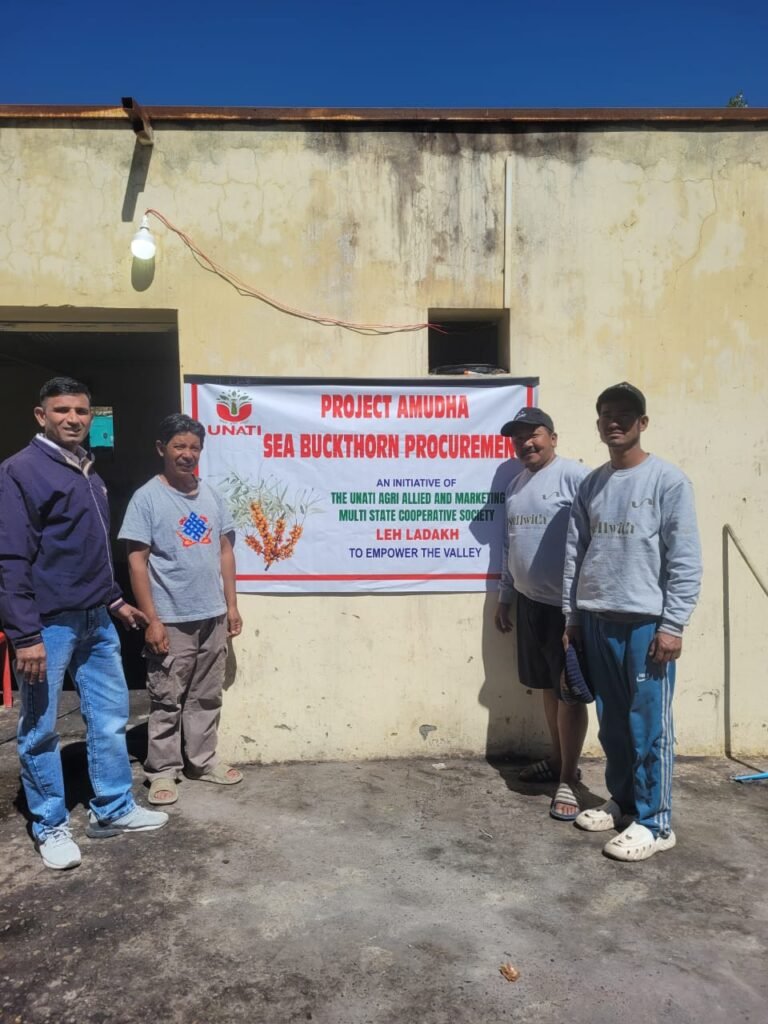
Through Project Amudha, Unati, Bami Dhunia Cooperative, and a Jaipur-based startup came together under our Start:Coop:Up approach. We deployed a mobile aseptic processing unit directly in the production area. This helped procure around 100 MT of seabuckthorn pulp, reduce post-harvest loss, and retain more value within the local community.
For me, the most important point is this: no funding, no donation—only the power of cooperativism. This is not charity. It is a self-sustainable business model with social impact.
Q2. You say traditional development approaches often fail in fragile regions. From your experience, what made you realize that a different model was needed?
In many development projects, we tend to follow ready-made models. Sometimes, these are inspired by international agencies. They involve SHGs, training sessions, workshops, and reports. But on the ground, the real question is: where is the economic activity?
Social impact cannot survive without economic activity. Livelihoods cannot be created only through meetings. People need a working business model.
In Ladakh, I observed that local communities, and even development authorities, had limited exposure to such complex value-chain work. Seabuckthorn was naturally available, but it was not being developed into a strong livelihood opportunity. So, we needed design thinking—a solution tailored to that geography, that crop, and that community.
Unati has worked for more than 25 years with bioresources, cooperatives, local entrepreneurs, and processing systems. We knew that if we brought together a cooperative, a startup, and local entrepreneurs, seabuckthorn could become a str ong livelihood engine.
That was the real turning point.
Q3. Project Amudha talks about “cooperation among cooperatives.” Is this idealism or a practical need?
It is not idealism; it is the future of the cooperative sector. However, we must understand one important thing. In cooperatives, we often say that members are our strength. I see it slightly differently. A member becomes a strength only when he becomes a stakeholder. A member may simply expect benefits, whereas a stakeholder contributes, takes responsibility, and shares risk. Cooperatives will become powerful only when members, other cooperatives, startups, entrepreneurs, and institutions work together as stakeholders toward a common purpose.
The biggest barrier is control. Sometimes, a few individuals want to control cooperatives. At times, even companies form cooperatives to influence policy. This is dangerous. True cooperativism is not about control; it is about participation.
Project Amudha demonstrated that when everyone contributes—the cooperative, the startup, the local entrepreneur, and the community—cooperation becomes practical.
Q4. The mobile aseptic processing unit is very innovative. How did this idea originate?
This idea emerged from a real ground-level problem. We needed processing facilities near the production cluster, as transporting raw seabuckthorn over long distances was not practical. The credit goes to SNL Innovation, Jaipur, and especially Mr. Sudhansu Gupta, one of our core group members. He is an IIT Bombay-trained chemical engineer with experience in large multinational companies. We presented him with the problem statement, and he worked on it at his own cost to develop a solution. What I appreciated most was that he did not see the cooperative merely as a customer. He viewed it as a platform. That is the spirit of Start:Coop:Up—startups and cooperatives working together to deliver real impact. This is the “brain gain of Bharat” that we need.
Q5. You strongly emphasize “no funding, no donation.” Why is this important to you? In India, a significant amount of money flows into development through grants, subsidies, and loans. However, the impact is often limited because many projects become dependent.
At Unati, we have focused on building self-sustainable models. For over two decades, we have operated without relying on grants, subsidies, or even bank loans. The key has been the trust of stakeholders. When stakeholders own the system, they do not wait for donations. They invest their time, energy, credibility, and resources. Personally, I believe that grants and subsidies can sometimes make organizations parasitic. What we need instead are symbiotic organizations—where everyone contributes and everyone grows. Project Amudha is a reflection of that belief.
Q6. Beyond numbers, what visible change did you observe in local communities?
Earlier, seabuckthorn did not have significant local value. Some private players were procuring it using very crude processing systems. The community lacked confidence that this resource could become a viable business opportunity. When we introduced technology and demonstrated processing locally, the situation began to change. Local entrepreneurs came forward. One entrepreneur even established an advanced processing facility independently and procured machinery from the Jaipur startup. Our team also provided technical training to local people. This marked a significant transformation. The community began to see seabuckthorn not just as a wild fruit, but as a valuable economic asset. For me, that confidence was the real impact.
Q7. Ladakh is a high-risk geography. What challenges reshaped your approach?
There were several challenges. First, our team needed time to acclimatize. Working at such high altitudes is not easy. Second, the machines were originally designed for plains. At higher altitudes, pressure differences, burners, and fluid dynamics behave differently. Therefore, the machine was not simply transported; it had to be re-understood in a new geographical context. However, our team remained resilient. Additionally, our Chairman, Shri Vikram Dogra ji, had strong linkages with administrative and development authorities, which provided valuable support. This experience taught us that technology cannot be copied and pasted; it must be adapted to local conditions.
Q8. You describe this as a scalable, asset-light model. What is the biggest risk in scaling it?
Anything that creates real benefits for local communities is scalable. However, the risk lies in replicating the machine while ignoring the ecosystem.The mobile unit is only one component. The real model includes local stakeholders, cooperative ownership, startup technology, market linkages, training, trust, and responsibility. In today’s gig economy, focused partnerships are crucial. Each partner must clearly understand their role. The cooperative should not attempt to do everything alone. The startup should not merely sell equipment. The local entrepreneur should not focus solely on profit. Everyone must align around the value chain.Thus, the biggest risk is scaling without local ownership.
Q9. What governance principle is non-negotiable in such cooperative projects?
For me, the most important currency of governance is trust. When trust exists among partners, governance becomes simple. We are Bharatiya people, and we believe in Sarve Bhavantu Sukhinah—when everyone’s welfare is considered, people naturally work toward the common good. Rules and agreements are important, but without trust, even the best agreements fail. In Project Amudha, trust enabled the cooperative, startup, and local stakeholders to work together effectively.
Q10. This initiative brings together a cooperative, a startup, and local producers. How did you align their different mindsets?
All three are part of the same supply chain. The cooperative focuses on community benefit. The startup focuses on technology and speed. The local producer focuses on livelihood and immediate value. These mindsets are different, but they are not contradictory/Our role was to help them understand that they are not separate actors—they are part of one chain. When the startup solves real problems, the cooperative provides a platform. When the local producer receives better value, the cooperative strengthens. When the cooperative strengthens, the startup also scales. This alignment is the essence of cooperative leadership.
Q11. What should a young entrepreneur or cooperative leader understand before replicating this model in Bihar, the Northeast, or any other region?
My simple advice is: behave like a cooperative, but work like a corporate. A cooperative is a socio-economic development model, and business is the tool to deliver that development. If you focus only on social work without business, sustainability becomes difficult. If you focus only on business without community ownership, real development may not occur. We have also experimented with a similar model for litchi pulping in Bihar. Every region has its own crop, culture, and challenges. First, understand the local resource, people, and market. Then design the model accordingly. Do not work in isolation. That is why many development and business models fail.
Q12. You say Amudha is not just an intervention but a platform. What is the difference?
A project is usually temporary—it addresses a specific need for a limited time .A platform, on the other hand, builds an ecosystem. It enables multiple activities to take place repeatedly in a sustainable manner. Project Amudha is not only about seabuckthorn pulp. It represents a methodology—how to bring processing closer to farmers, how to integrate cooperatives and startups, how to reduce waste, how to create local value, and how to build climate-resilient livelihoods. That is why I refer to it as a platform.
Q13. How has this project changed your understanding of cooperativism as a lived reality?
This project has strengthened my belief that in an uncertain world, sustainability lies in community participation. The International Cooperative Alliance states, “Cooperatives build a better world.” I have experienced this firsthand. Cooperativism provides a comprehensive mechanism to distribute benefits among a large number of people. If honest cooperative leaders work together with clarity and courage, cooperatives can achieve remarkable outcomes. Having worked with diverse communities, I believe that our communities are inherently resilient. Bharat’s diversity has made us natural design thinkers. That is why I believe cooperatives can become the destiny-makers of a Viksit Bharat.
Q14. What is your long-term vision for Project Amudha? What support or policy changes do you expect?
Our long-term vision is to establish a “Farm to Factory to Fork” model, where farmers are not required to become factory owners but can access processing services near their farms.Project Amudha has demonstrated this effectively. A mobile processing unit can operate close to production areas and convert local produce into value-added products. This model can be applied to seabuckthorn in Ladakh, apples in Kashmir, litchi in Bihar, bamboo in the Northeast, and many other bioresources. We have also introduced the concept of a Rural Milieu Accelerator, where technical institutions, startups, corporates, and cooperatives collaborate to provide services to PACS, FPOs, and farmer members.
The policy support we require is straightforward:
Cooperatives should be recognized as enterprise platforms, not merely welfare institutions. Startups working with cooperatives should receive recognition and support. Mobile and decentralized processing should be promoted as climate-resilient rural infrastructure. PACS and FPOs should be empowered to function as service hubs for local value addition.
If these changes are implemented, Project Amudha can evolve into a national model.
Project Amudha clearly demonstrates one thing: rural development does not always require large infrastructure, extensive funding, or grand speeches. Sometimes, it requires a well-defined problem statement, a committed cooperative, a capable startup, a confident local community, and a mobile machine that reaches the farmer.
This is the future Unati envisions—prosperity that reaches people, value that remains within communities, and cooperation that becomes the business model of Bharat.

3 Responses
Self-sustainable business model with social impact. Cooperative, working like a corporate. Socio-economic development model, through business for overall development without separating these two is excellent concept. We have been working in isolation which is trhe biggest reason for failures. farmers have resources, they rae united, they have immense knowledge about resources but how to get benefit out of these resouirces through cooperation and business linkage is teh key to success.
Unati throuigh Myoti Saroop has done wonders and the journey is continued for betterment all the time.
Good luck to New Initiative “AMUDA” with wonder resource Seabuckthorn, which has changed fortunes of farmers in China and many more resources to follow.
Really a great step to avoid postharvest losses especially in Hilly areas of J&K and Ladakh. We too motivated our farmers to produce aseptic Apple pulp with assistance of Shri Sudhanshu gupta and his team at Innofarms. Our young entrepreneurs and startup growers got good results by pulper machinery.
Really a great step to avoid postharvest losses especially in Hilly areas of J&K and Ladakh. We too motivated our farmers to produce aseptic Apple pulp with assistance of Shri Sudhanshu gupta and his team at Innofarms. Our young entrepreneurs and startup growers got good results by pulper machinery.