

Dr.S.L.N.T.Srinivas
Dr.S.L.N.T.Srinivas
Expert in Cooperative Governance & Management
Member, All India Authors Group
NCCT: Ministry of Cooperation, Govt. of India
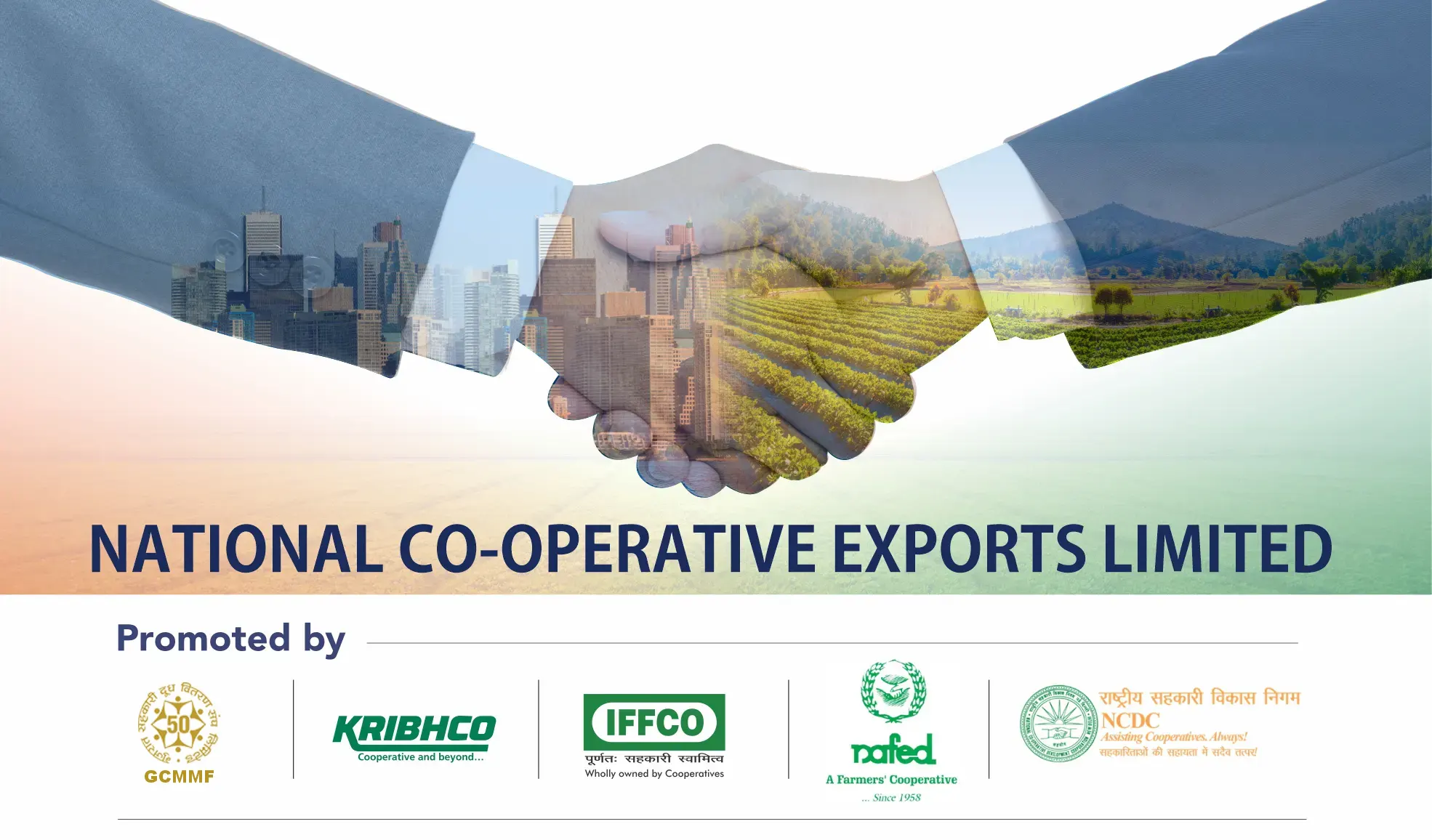
In a short span since its inception, the National Cooperative Exports Limited (NCEL) has emerged as a transformative force in India’s agricultural export landscape. Anchored in the cooperative spirit and driven by the vision of “Sahakar se Samriddhi,” NCEL is enabling farmers, producer organisations, and cooperative institutions to access international markets, enhance incomes, and contribute meaningfully to India’s rural-led economic growth.
Strengthening India’s Cooperative Export Footprint
Within just two years of operation, NCEL has demonstrated robust growth and institutional credibility. In the financial year 2024–25, it recorded a turnover of Rs 4,283 crore and achieved a net profit of Rs 122 crore, marking its firm position in India’s agri-export ecosystem.
During this period, NCEL exported 10.83 lakh metric tonnes (LMT) of agricultural commodities valued at Rs 4,283.56 crore, compared to 2.66 LMT worth Rs 1,113.13 crore in the previous year. Cumulatively, since inception, exports have reached 13.49 LMT valued at Rs 5,403.01 crore.
The export basket of NCEL reflects India’s agricultural diversity — including rice, sugar, spices, tea, fresh red onions, baby food, processed foods, marine products, and coarse cereals. These products have reached 28 international markets, strengthening India’s global agri-export footprint and the reputation of its cooperatives.
A Cooperative-Driven Model of Export Empowerment
NCEL’s foundation rests on the strength of the cooperative network. By August 2025, the organisation had enrolled 11,034 cooperative members, including 10,793 Primary Agricultural Credit Societies (PACS), 216 tehsil- and district-level cooperatives, 10 state- and multi-state-level cooperatives, and its five promoter organisations.
At the grassroots, PACS serve as the operational backbone, facilitating procurement, aggregation, and traceability of produce from village-level producers. This structure ensures that farmers benefit directly from export earnings, receive fair value for their produce, and participate as equal stakeholders in global trade. The model reflects a paradigm shift from trader-led exports to producer-owned cooperative exports, thereby ensuring equitable wealth distribution.
Institutional Growth and Strategic Initiatives
Established on 25 January 2023 under the Multi-State Cooperative Societies Act, 2002, NCEL was conceived to consolidate cooperative capacities for global trade. With an initial paid-up capital of Rs 500 crore and an authorised share capital of Rs 2,000 crore, the organisation has quickly expanded its operational network and market linkages.
To enhance its international presence, NCEL has signed 61 Memoranda of Understanding (MoUs) with importers in Senegal, Indonesia, Nepal, and several other countries. Simultaneously, strategic partnerships have been forged with state agencies and cooperative federations, aligning domestic procurement systems with global export requirements.
Recognising the importance of preparedness and awareness, NCEL launched a commodity-specific seminar series to educate farmers and cooperatives on export readiness, documentation, quality standards, and international compliance. The first event in this series was successfully held in Madhya Pradesh in July 2025, marking the beginning of a sustained knowledge outreach campaign.
The organisation has also deepened its communication and outreach through Business Process Outsourcing (BPO) initiatives, multilingual newsletters in 10 Indian languages, social media campaigns, and innovative Nukkad Natak awareness programmes to mobilise farmers and cooperative members.
Expanding Horizons: Vision and Strategic Direction
NCEL’s growth strategy aligns with the national objective of enhancing India’s global agricultural presence through cooperative-led exports. The organisation has been encouraged to diversify into high-potential commodities, including sugar from cooperative mills, aromatic rice from the Northeast, organic cotton, coarse grains, and fresh vegetables for Gulf markets.
Ambitious national targets have been set for NCEL to achieve Rs 2 lakh crore in exports, with turnover projections between Rs 20,000 crore and Rs 30,000 crore annually, thereby generating sustainable profits for cooperative members. Plans are underway to establish overseas
offices in Africa and Myanmar and to develop a digital trade platform that seamlessly connects global demand with cooperative supply through real-time data integration.
Towards a Global Cooperative Brand for India
NCEL’s trajectory represents a new chapter in India’s cooperative movement — one that integrates rural enterprise, digital innovation, and international trade. With a growing member base, diversified commodity portfolio, and strong institutional backing, it stands as a model of how cooperatives can power economic transformation.
As India aspires to become a global agricultural powerhouse, NCEL exemplifies the fusion of collective strength and market competitiveness. By empowering farmers through cooperatives, promoting inclusive value chains, and positioning Indian produce on the global stage, NCEL is set to become the international face of India’s cooperative excellence and a cornerstone of rural prosperity.