
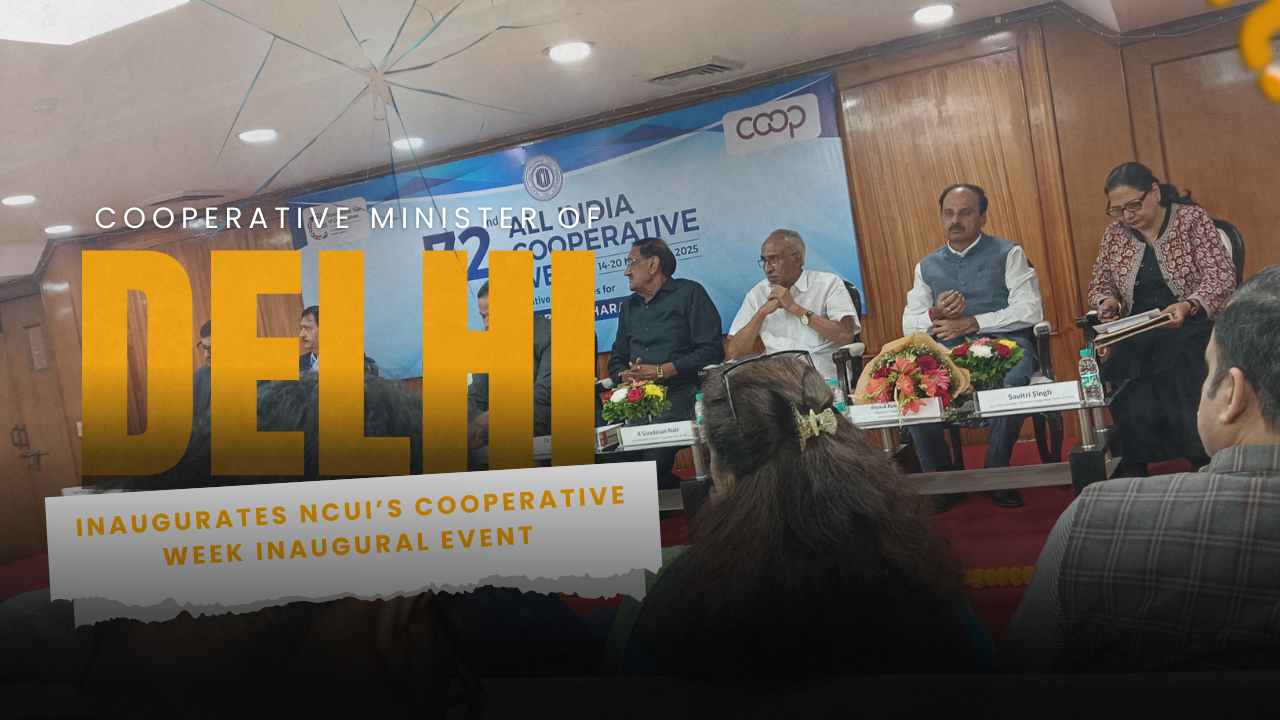
During the International Year of Cooperatives , the inaugural function of 72nd All India Cooperative Week celebrations organized by NCUI on 14th November was quite significant. Inaugurating the Cooperative Week, while extolling the virtues of Cooperation as a philosophy, Hon’ble Cooperative Minister of Delhi Ravinder Indraj Singh said that cooperative is the cornerstone and base of Hon’ble Prime Minister of India Narendra Modi’s vision of India as a Vishwaguru. For this to happen, he emphasized that the cooperatives need to change their working style. Strongly pointing out that cooperatives are necessary for Delhi’s development and common man’s survival, he said that the cooperative laws need a change so that a conducive atmosphere is created for conducive cooperative development. When the Cooperative Minister called for suggestions for revamping the cooperatives in Delhi, it appeared he meant business. Can Delhi emerge as an ideal model for cooperative development ? The Minister in one of his earlier speeches had emphasized this point.
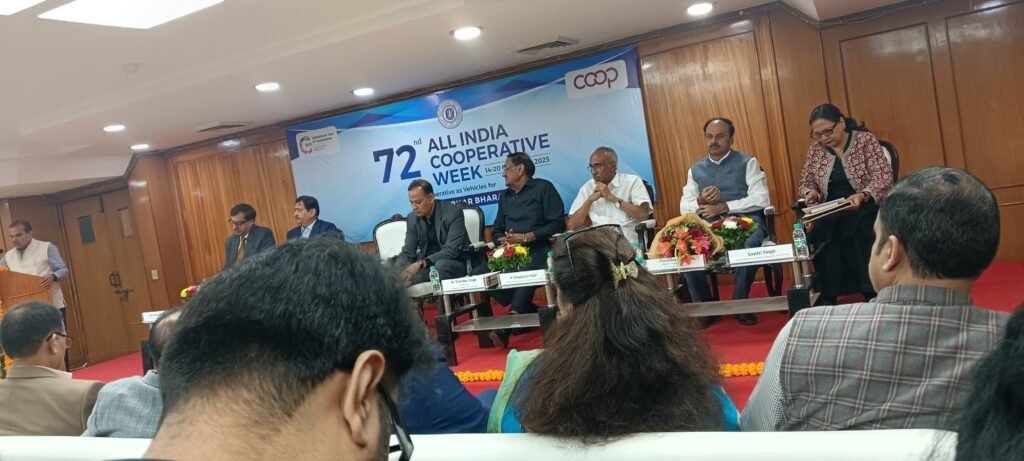
Dr. Chandra Pal Singh Yadav, President,, ICA-AP speaking on the occasion said that cooperatives are the ideal instruments for socio-economic development of the poor and down-trodden sections of the society. While he said that cooperatives have a long g history, he highly appreciated the present government for giving cooperatives their due recognition. The high profile of Indian cooperatives was well reflected when he said that Indian cooperative movement is the largest in the world and other countries want to replicate the Indian model.

Dr Bijender Singh, Vice President, NCUI made an important observation that the Indian cooperatives have the strength to compete with Adanis and Ambanis. The 6th Principle of ‘ Cooperation Among Cooperatives’ needs to be well implemented to make this a reality. Dr Sudhir Mahajan, Chief Executive, NCUI, while appreciating the initiatives of Ministry of Cooperation, highlighted the achievements of NCUI’s education and training programs as well the good work of NCUI’s Cooperative Entrepreneurship Development cell. Savitri Singh, Dy Chief Executive, NCUI, while expressing vote of thanks, highlighted the sustainable character of cooperatives. Ved Prakash, Executive Director, anchored the program well. The Special issue of NCUI’s magazine ‘The Cooperator’ was released on this occasion.
NCUI, being an apex organization of the cooperative movement, takes a lead and sets the agenda for the Cooperative Week by chalking out the main theme and sub-themes. The cooperative organizations all over the country follow the guidelines and organize various events including workshops, seminars, youth events, etc during the week-long celebrations. The theme of this year’s Cooperative Week celebrations is ‘Cooperatives as Vehicles For Atmanirbhar Bharat’. Every year, one of the themes has a focus on youth. No doubt, the cooperative organizations all over the country come up with several innovative programs during the Cooperatiev Week to attract youth towards the cooperative concept.