
Cooperative Democracy in Practice: Transforming Communities from Marginalisation to Development

The United Nations launched the Millennium Development Goals (MDGs) in 2000 with the mission of eradicating extreme poverty, hunger, disease, and inequality by the year 2015.
A Roadmap for the Next Phase of Cooperative Development.

Aligned with the initiatives of Ministry of Cooperation, Pirthipur Agriculture Cooperative Society in Himachal Pradesh, with more than 100 years of existence, is a success story in PACS transformation.
Pirthipur Agriculture Cooperative Society in Himachal Pradesh Surges Ahead

Aligned with the initiatives of Ministry of Cooperation, Pirthipur Agriculture Cooperative Society in Himachal Pradesh, with more than 100 years of existence, is a success story in PACS transformation.
Capital Augmentation for ‘Future-Ready’ Rural Financial Cooperatives; An Interview with Krishna Kumar Gupta, Former Chief General Manager, NABARD

The Government has announced new National Cooperative Policy recently.
Green Financing through Cooperative Credit and Banking Institutions

The United Nations launched the Millennium Development Goals (MDGs) in 2000 with the mission of eradicating extreme poverty, hunger, disease, and inequality by the year 2015.
Reinventing Next-Generation Fisheries Cooperatives as Innovation-Driven Rural MSME Engines

India’s fisheries and aquaculture sector is emerging as a rapidly growing sector in terms of production, value addition, exports and livelihood support. It accounts for 7.43% of agricultural gross value added and contributes 1.1% to the national gross domestic product.
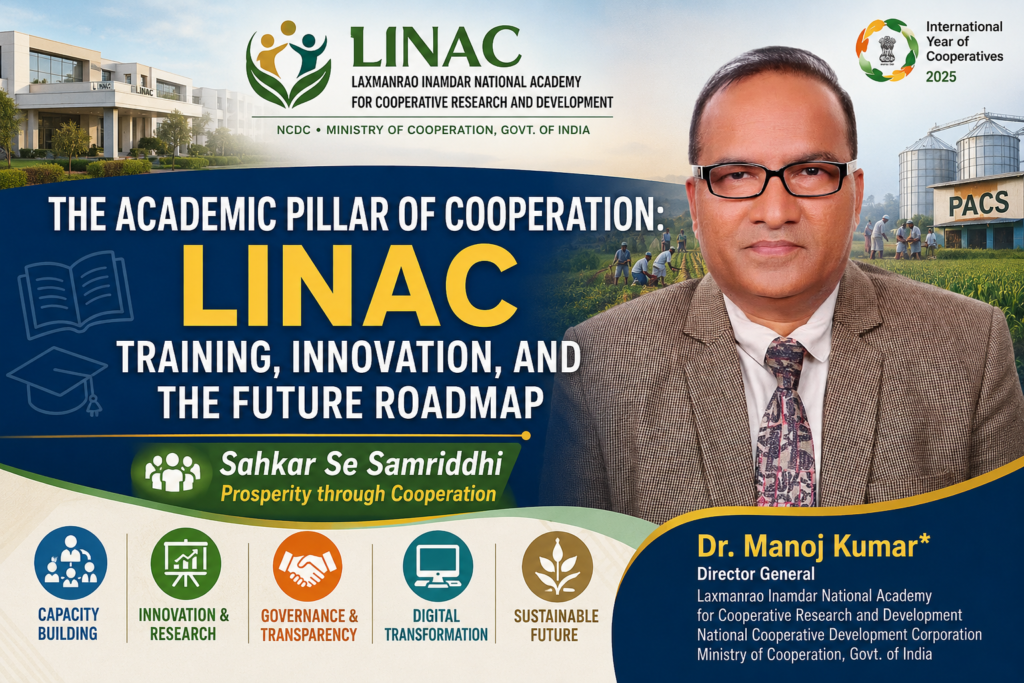
The Academic Pillar of Cooperation: LINAC – Training, Innovation, and the Future Roadmap
The Reserve Bank of India’s decision to cancel the licence of Sarvodaya Co-operative Bank Ltd. on May 12, 2026, is not merely another regulatory action against a distressed financial institution. It is a reminder that India’s cooperative banking sector continues to face significant challenges in governance credibility, depositor protection, and institutional resilience.
From PMC to Sarvodaya: Why Governance Reform in Cooperative Banking Cannot Wait
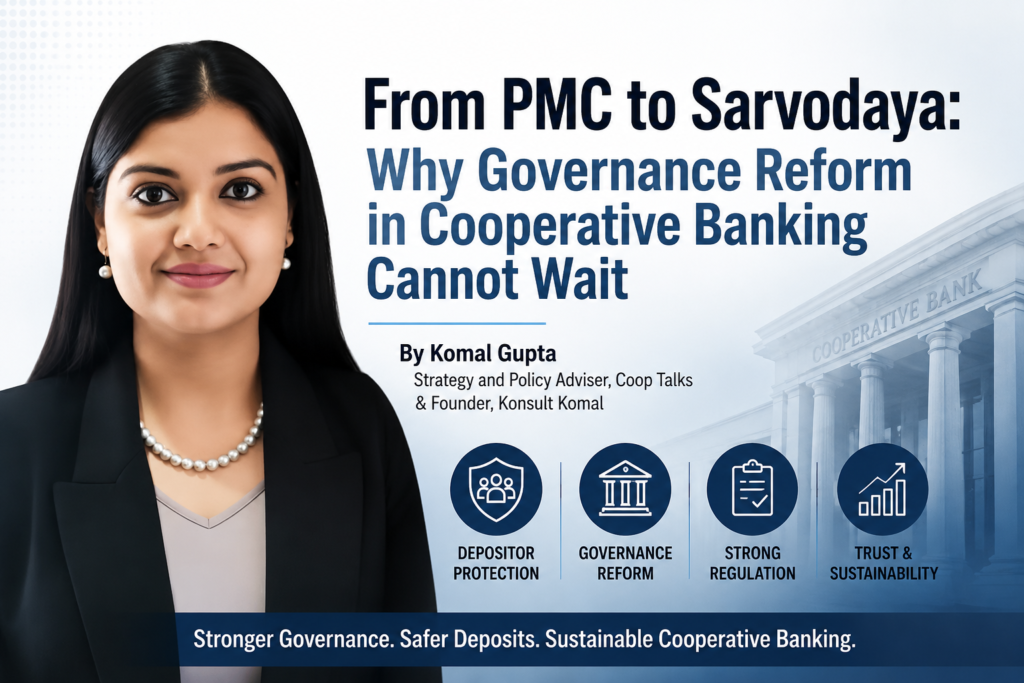
The Reserve Bank of India’s decision to cancel the licence of Sarvodaya Co-operative Bank Ltd. on May 12, 2026, is not merely another regulatory action against a distressed financial institution. It is a reminder that India’s cooperative banking sector continues to face significant challenges in governance credibility, depositor protection, and institutional resilience.
Strengthening Global Cooperative Linkages; Reimagining Markets Through Coop-to-Coop Trade; An Interview with Col. Himanshu, Director, NEDAC

In this insightful interview, we explore the evolving role of cooperatives in a globally connected economy with Col. Himanshu, Director of the Network for the Development of Agricultural Cooperatives in Asia and the Pacific.
Project Amudha: Taking Livelihoods to the Farmer through a Cooperative Model Interview with Jyoti Saroop, Founder Director, Unati

In recent years, we have seen many development models being implemented in rural and remote regions, but not all of them have been able to create a lasting impact—especially in fragile geographies like Ladakh. In this context, Unati Cooperative has been experimenting with a different approach through its Project Amudha. Jyoti Saroop, Founder Director of Unati, has a candid conversation with Sanjay Verma, Founder/Editor of Coop Talks, on several key issues.